JILLIAN HOLBROOK
Leading with Excellence, Resilience, Integrity, Ambition, and Empathy.

Interdisciplinary Honors Student and Global Scholar
Broadening cultural competence and cross-disciplinary understanding through reflective learning and consideration of multiple perspectives
Overview
When I applied to the University of Washington, I was accepted for admission into the Interdisciplinary Honors Program. The intention of Interdisciplinary Honors is for students to consider global challenges and apply curiosity to connect their learning and life experiences across academic disciplines. Through Interdisciplinary Honors, I derive meaning from experiences by engaging in active reflection of my knowledge, perspectives, and identity as a global scholar—including my participation in coursework outside of my traditional academic disciplines, which challenges me to examine my privilege, power, and positionality.
In conjunction with completing nine total honors courses in natural science, social science, arts and humanities, and cross-sectional disciplines, I completed reflective "experiential learning" activities. Experiential learning activities consist of knowledge-building opportunities that extend the educational process beyond the traditional classroom setting in the categories of leadership, research, service, and international engagement. My experiences as a live mascot handler of Dubs II for University of Washington Athletics, an undergraduate researcher in the Sibley Lab, a volunteer and Co-President of the Brain Exercise Initiative, and as a student abroad in Scandinavia, I completed activities consistent with each learning discipline.


Spring 2024: Husky 100. In 2024, I was named a Husky 100 for my scholarship, leadership, and service. The Husky 100 recognizes the top 100 graduate and undergraduate students across the University of Washington's three campuses who are making the most of their time at UW. My induction into the Husky 100 transcended meaningful achievement because it connected me with other changemakers and recognized how my efforts to derive connections from my experiences influence my ability to serve and uplift my communities.
My honors coursework consisted of classes designed to challenge and improve my ability to learn, lead, and engage as a global citizen. The following course overview contextualizes the honors coursework I completed during my undergraduate education:
- Honors 100: Introduction to Honors Education
- Honors General Chemistry Series (CHEM 145, 155, 165)
- Honors 232: Human Trafficking in an Era of Globalization
- Honors 398: The Brain and the Healing Power of Poetry
- Honors 393: Rhetoric of Health and Medicine
- Honors Ad Hoc Project: Murder (SOC 275)
- Honors 345: Interdisciplinary Writing Seminar
- Honors 213: Art and Activism in the Nordic Region
- Honors 220: Storytelling in the Sciences
- Honors 496: Integration of the Honors Curriculum
Autumn 2021
Autumn 2021-Spring2022
Spring 2022
Spring 2022
Autumn 2022
Autumn 2023
Spring 2024
Summer 2024
Fall 2024
Spring 2025
Personal Importance of Work
Being an interdisciplinary global scholar allows me to approach complex challenges with a broader, more nuanced perspective. By integrating diverse disciplines, I connect scientific inquiry with social justice, bridging neuroscience, psychology, and public health with policy, ethics, and cultural studies. Studying abroad and examining global perspectives on power, privilege, and positionality have deepened my understanding of systemic inequities and how they manifest across different societies. This lens enables me to develop holistic, culturally competent solutions as a future physician-researcher. Embracing interdisciplinary learning has not only sharpened my critical thinking but also reinforced my commitment to equity, accessibility, and meaningful change in healthcare and beyond.
Tasks Accomplished:
-
Studied abroad in Sweden and Finland to learn about Art and Activism in the Nordic Region
-
Completed an Ad Hoc honors research project on intimate partner homicide (IPH) by reviewing literature and synthesizing data Washington state and the broader United States to broaden learning from Murder class objectives, including strain theory, homicide classifications, prevalence, and weapon use—including a written reflection on recommendations for public policy on restraining firearm access for domestic abusers
-
Presented term projects on diverse scientific and social justice topics including, reforming carceral nutrition, cross-species bidirectional bonding, and forced labor and human trafficking in the fishing and agricultural sectors
-
Wrote synthesis composition pieces on “Undermining Children’s Rights and Welfare: How Child Labor in Mining Raw Minerals Fuels the Global Consumer Market”, “Disenfranchisement of Health in Disability”, and “How Capitalistic Clinical Treatments Broaden Privilege Gaps”
-
Created a journal article for the Journal of Popular Culture on “Fitting the Mold: The Weight of Body Image and Health Metrics in Exergaming”
-
Published a collection of poems on the brain and the healing, transformative power of poetry for a class anthology called Citrus Stitches
Leadership Competencies Gained


Self-Understanding
Engaging in interdisciplinary coursework and studying abroad has deepened my self-understanding by challenging me to think critically, integrate diverse perspectives, and reflect on my values. Courses such as Rhetoric of Health and Medicine and Human Trafficking in an Era of Globalization have pushed me to examine ethical dilemmas, like medicalization and forced labor, as well as societal structures and social construction. By taking coursework outside of my traditional disciplines in neuroscience and psychology, I strengthened my ability to analyze complex issues and articulate my beliefs with knowledge from a variety of perspectives; moreover, I have recognized how my intellectual curiosity and knowledge can be applied to real-world problems I may not have been exposed to previously.
Studying abroad has also further shaped my self-awareness by immersing me in unfamiliar cultural environments and encouraging me to adapt, reflect, and engage with new perspectives. Art and Activism in the Nordic Region allowed me to connect more deeply with my Scandinavian heritage, reinforcing my understanding of how personal identity shapes my experiences and aspirations and informing my perspective on what it means to be a global citizen and scholar.
Social Justice
Through Art and Activism in the Nordic Region, I explored how art can be used as a tool for creative expression and resistance and how justice movements can drive social change, shaping my perspective on advocacy, communication, and public engagement throughout history. Furthermore, by comparing and contrasting social justice movements in the United States with the Nordic countries I connected my learning experiences about climate change, LGBTQIA+ rights, adoption trafficking, sex work, drug policy, and immigration to cross-cultural contexts. For example, I attended a panel on harm reduction and was able to draw parallels between Sweden and the United States’ drug criminalization policies and how arrests for illicit substances included in federal drug schedules disproportionately target minority populations, including people of color and the LGBTQIA+ community. Understanding how other countries approach social justice movements and how these movements are publicly organized via protest and artistry has expanded my perspective to better understand how historical, political, and social ingredients shape ideology and systemic inequity.
Additionally, my Ad Hoc honors research project for Murder on intimate partner homicide (IPH) allowed me to bridge academic theory with real-world advocacy. By analyzing firearm access laws for domestic abusers, I engaged with legal and policy frameworks to understand how women’s mortality is impacted. Although domestic abuse is not the only form of strain that contributes to IPH, firearms are used in 55% of IPH incidences—preventing individuals with a documented history of domestic violence from obtaining a firearm by implementing state restrictions significantly decreases the risk of lethality.
Applying my interdisciplinary learning experiences allows me to critically engage with social justice movements and look insightfully into national issues and topics of consideration in public policy.
Synthesis
Creating a reflective portfolio has strengthened my ability to synthesize complex ideas by integrating my diverse academic, research, and leadership experiences into a cohesive narrative. Through interdisciplinary coursework, global studies, and social justice research, I have learned to connect themes across disciplines, identifying patterns and underlying systems that shape health, policy, and human behavior. My reflections require distilling broad concepts into meaningful insights, demonstrating how my experiences intersect and inform my growth as a scholar and leader. By articulating connections across experiences and areas of knowledge, I refine my ability to think critically, draw evidence-based conclusions, and apply my learning across contexts to create innovative, holistic solutions.
Reflection and Application
My experiences emphasize both reflection and application, allowing me to bridge knowledge with meaningful action. Through interdisciplinary coursework, global studies, and leadership roles, I have engaged in continuous self-examination to understand how my values, skills, and experiences intersect. Reflecting on topics like carceral reform, healthcare accessibility, and social construction of disability has deepened my critical thinking, while applying these insights—whether through research, advocacy, or mentorship—has reinforced my commitment to equity and impact. In The Brain and the Healing Power of Poetry, I had the opportunity to reflect on the transformative qualities of art in rehabilitation and care by writing about my own experiences. Through translating reflection into practice, I ensure that my learning is active and directed.
Lessons Learned
Interdisciplinary scholarship and global perspectives on social movements, justice, and policy frameworks are essential for a future physician-researcher to provide equitable, culturally competent care and drive impactful research with respect to social determinants of health and cultural factors. Moreover, understanding how historical and systemic inequities shape health outcomes will equip me to challenge biases in medical practice and research design. Integrating my learning experiences and practicing reflection allows me to understand how knowledge across disciplines broadens my perspectives, shapes my beliefs, and encourages a lifetime of learning. I want to approach patient care and research with humility and inclusivity to foster trust and advocate solutions that serve diverse populations rather than perpetuate existing inequities. Studying outside of my traditional disciplines allows me to improve skillsets that are relevant to my future career success and self-understanding.
In particular, my study abroad experience was a transformative opportunity to practice cultural immersion, reflect on my identity and heritage, and understand how culture shapes societies. I traveled internationally for the first time and enjoyed the opportunity to take initiative in visiting museums, historical sites, art galleries, botanical gardens, and other locations abroad that enriched my coursework and perspectives.
Interdisciplinary Gallery

Summer 2024: Nordic Colorscapes. In studying Art and Activism in the Nordic Region, I completed personal art projects, including jewelry on national symbolism and a final collage woven from my colorful travels through Sweden, Denmark, and Finland—with color palettes echoing both national hues and the primary colors of RYB color theory. This composition of images captures moments of exploration—wandering through vibrant city centers, historical sites, and natural environments. In essence, the project reflects finding comfort in independence and interconnecting studies on language, art, and history from the perspective of a first-time international traveler.
Autumn 2024: Now Presenting. . . In Storytelling in the Sciences, I synthesized my knowledge of neuroethology—the biological bases of animal behavior—with systems neuroscience and my experience as a student handler for the University of Washington's live mascot, Dubs II, to deliver a presentation on bidirectional cross-species bonding. My presentation demonstrated tangible skills from the course, including an emphasis on improving my skills as an orator. I learned methods to deliver information concisely and engagingly by utilizing my lived experience and my scientific knowledge. Effective communication serves as a cornerstone of research and medicine, and I enjoyed translating skills from my presentation development process to my first research conference presentation in Anaheim, California, in November 2024.

Spring 2023: My Big Fat Foray into Seminar Classes. Taking seminar classes at the University of Washington allowed me to further diversify my coursework and experiences. Between Bioengineering and Public Health Solutions for a Better World (Bioen 454) and Global Food Systems (Nutr 400) and Population Bioethics (B.H. 215), I bolstered my love of learning simply out of a desire to expose myself to new topics. In one of my favorite seminars, Food in Film (Nutr 390), I was able to tap into my creative side by making menus based off of movies. The three menus I created were based off of comfort films I enjoyed watching growing up: My Big Fat Greek Wedding (menu pictured above), You've Got Mail, and Mrs. Doubtfire.
Spring 2024: Societal Pressure Cooker. Taking seminar coursework in nutrition influenced other health-based projects about the role of food, exercise, and body image. In my honors composition course, Honors 345, I was challenged to write a Journal of Pop Culture scholarly article about games. Although I love a game of chess or other boardgames, the writing topic pushed me outside of my comfort zone because I had not consider approaches to breaking down the rhetoric of game rules or understanding the social construction of play spaces. To bridge my healthcare interests with the course project, I elected to write about exercise games, also known as "exergaming." The project allowed me to synthesize personal experience from my youth with my experiences unpacking body social construction, the body mass index, and years of my life in the realm of athletics. Scholarly article below.

Summer 2024: Here We Go Again! Through my study abroad experience, I explored my Swedish heritage while learning about the use of art to enact social change throughout history and the modern era. Beyond bridging art, cultural studies, and history, my study abroad allowed me to cultivate independence, curiosity, and an international understanding of strategies for activism and justice movements, which mirror my values of improving equity and enacting positive, empathy-driven change.
As a lifelong ABBA fan, one of the numerous memories I enjoyed was visiting Sweden's ABBA Museum, which includes original costumes, instruments, and props from throughout the group's muscial career. I embraced stepping out of my comfort zone by performing the song "Mamma Mia" on stage. Visitors can dress up and perform a song and dance choregraphy with lifesize holograms of ABBA. The applause from the audience was sweet, but the self-confidence I exercised to volunteer and complete my performace was even sweeter.

Winter 2023: 'Til Death Do Us Part: Intimate Partner Homicide Against Women. What makes a killer? How do social-structural and social-psychological theories attempt to explain this form of deviance? Beyond motive and means, murder impacts real victims and their families; it is complex in its definitions and relationships. For an honors ad hoc project, I researched intimate partner homicide (IPH) and developed an infographic synthesizing homicide classifications, strain theories, and a comparison of IPH prevalence between local and national levels. Beyond improving my literature review skills and applying critical thinking, this project allowed me to examine IPH as an extension of domestic violence and critique existing government policies on victim services, firearm access, and reproductive coercion—including the emboldening of domestic abusers in the United States following the overturning of Roe v. Wade.
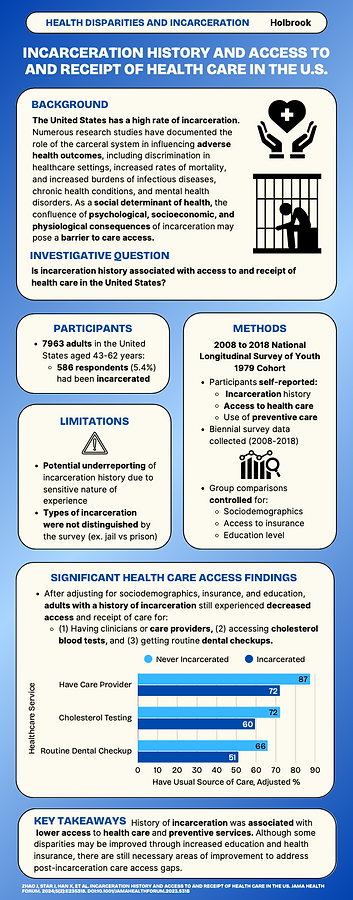
Spring 2025: Health Equity. Through my coursework in Psych 439, Psychology of Health Disparities, I had the opportunity to make connections between my major coursework and coursework within interdisciplinary honors. As part of my science communication work, I created infographics on health disparities among individuals who experienced incarceration, which builds off of themes from my examination of carceral nutrition and punishment in Honors 393 (Rhetoric of Health and Medicine) and Honors 220 (Storytelling in the Sciences).

Spring 2024: Anatomy of a Neuroscientist. These functional magnertic resonance imaging (fMRI) captures show from left to right an axial, sagittal, and coronal view of my brain, which was captured in lab at Kincaid Hall. My favorite neuroscience courses were Diseases of the Nervous System (Neusci 402) and Neuroanatomy and Systems Neuroscience (Neusci 401). For Neusci 401, I practiced recalling the sensory, motor, and associative brain regions by using my own scans as a practice reference for labeling. Together, Neusci 401 and Neusci 402, as well as Neuropharmacology (Neusci 404) affirmed my deep interest in biological systems, presentations of disease, and the existing treatment landscape in neurology and neurosurgery.